
1.5 Build your first AI team
Consider a product introduction: you set the direction and make the final publishing decision, a research colleague gathers the facts, a writing colleague produces the draft, and a review colleague checks sources and claims.
Define three roles
| Colleague | Input | Expected deliverable |
|---|---|---|
| Research colleague | Product information you provide | Known facts, sources, and missing information |
| Writing colleague | Fact list and intended audience | A title, body copy, and statements that need confirmation |
| Review colleague | Original material and draft | Specific issues, supporting evidence, and suggested changes |
From Colleagues → Hire a new colleague, describe the role to generate a draft, or choose the manual option to use the wizard. Review the responsibilities and boundaries before confirming. Skills provide methods; knowledge provides factual grounding. Naming a colleague an “expert” does not itself grant tools or access.
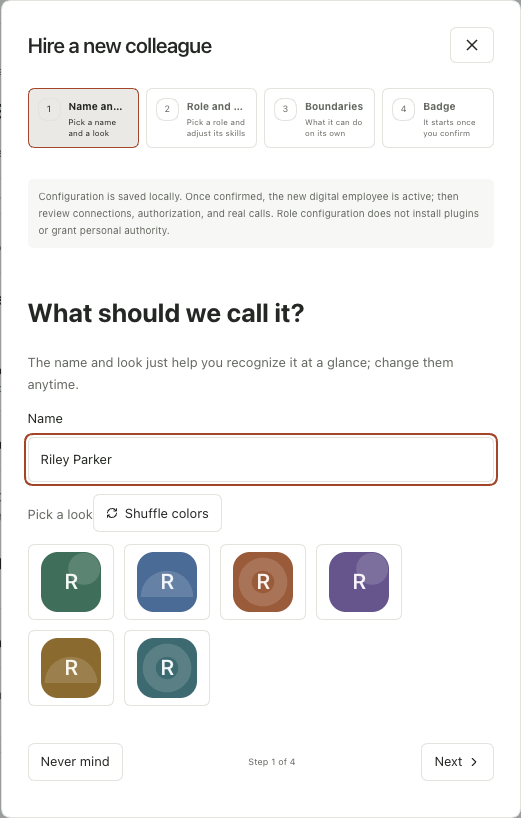
English interface with a sample name. The manual wizard starts with identity; review the role, capabilities, and boundaries in the following steps.
Create a group
Open the conversation directory in Conversations and choose Create group from its new-conversation menu. Enter the group name and business area, then continue to search for and select the three colleagues you created. Name the group after its specific purpose, such as “Product introduction preparation.” You can add more colleagues later through the group members entry. See Group collaboration.
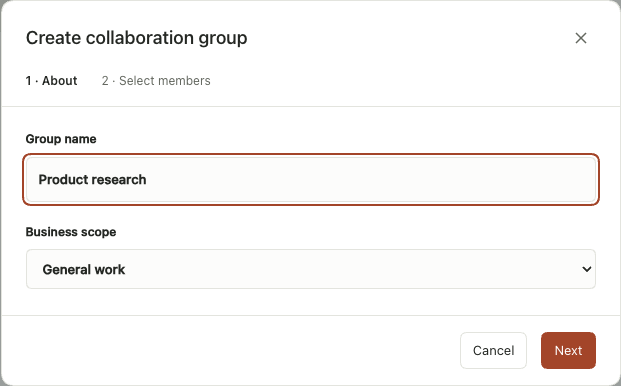
English interface with a sample group name. Continue to choose members after entering the group details. Name the group after the work it will do.
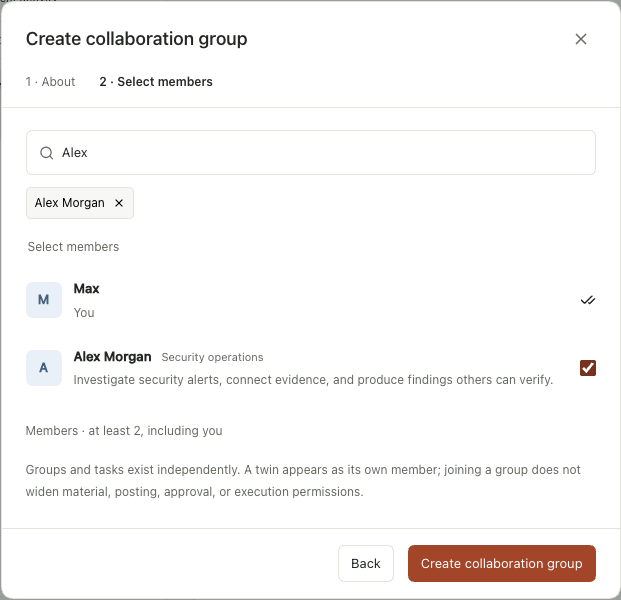
English interface with a sample colleague. Search by name, then select the matching person. The image uses an existing role to demonstrate the picker.
Hand off one step at a time
First, mention the research colleague to organize the material. After checking the findings, pass them to the writing colleague, then ask the review colleague to verify the draft. Use explicit handoff points when starting out, so several colleagues do not change the same unfinished content at once.
Research colleague: list the facts and gaps first. Do not write promotional copy.
I will check the findings before handing them to the writing colleague. The review should rely only on the original material and confirmed facts.
Keep the final deliverable in this group. I will decide whether to publish it.
When you need status, records, and delivery tracking, create a formal task for the relevant colleague and check how its results relate to the group messages. A discussion in a group does not necessarily create a separate task or a complete set of dependencies automatically.
What success looks like
You can tell who completed each step, which material they relied on, and what questions remain. Repeat this workflow with the content team tutorial, then decide which steps are suitable for automation.